Outdoor Activity
Market Analysis
A comprehensive PESTEL and SWOT analysis of the outdoor lifestyle and amenity market within Dubai's real estate sector — examining the forces reshaping property values, community design, and long-term investment strategy.
Key Market Indicators
The Numbers That Define the Market
Executive Summary
From Luxury Add-On to
Core Value Driver
Dubai's real estate market is undergoing a structural transformation. Outdoor amenities — parks, cycling tracks, biophilic landscapes, sports facilities, and wellness spaces — have shifted from being optional differentiators to fundamental drivers of property value, tenant retention, and capital appreciation.
The Dubai 2040 Urban Master Plan mandates a 134% increase in public green space, backed by AED 4 billion in committed infrastructure investment. In H1 2025, 94,700 new investors entered the market — a 26% year-on-year increase — with wellness-led communities dominating high-value transaction segments above AED 10 million.
This analysis applies the PESTEL and SWOT frameworks to map the strategic landscape, identify competitive advantages, and surface actionable insights for developers, investors, and sales professionals operating in this market.
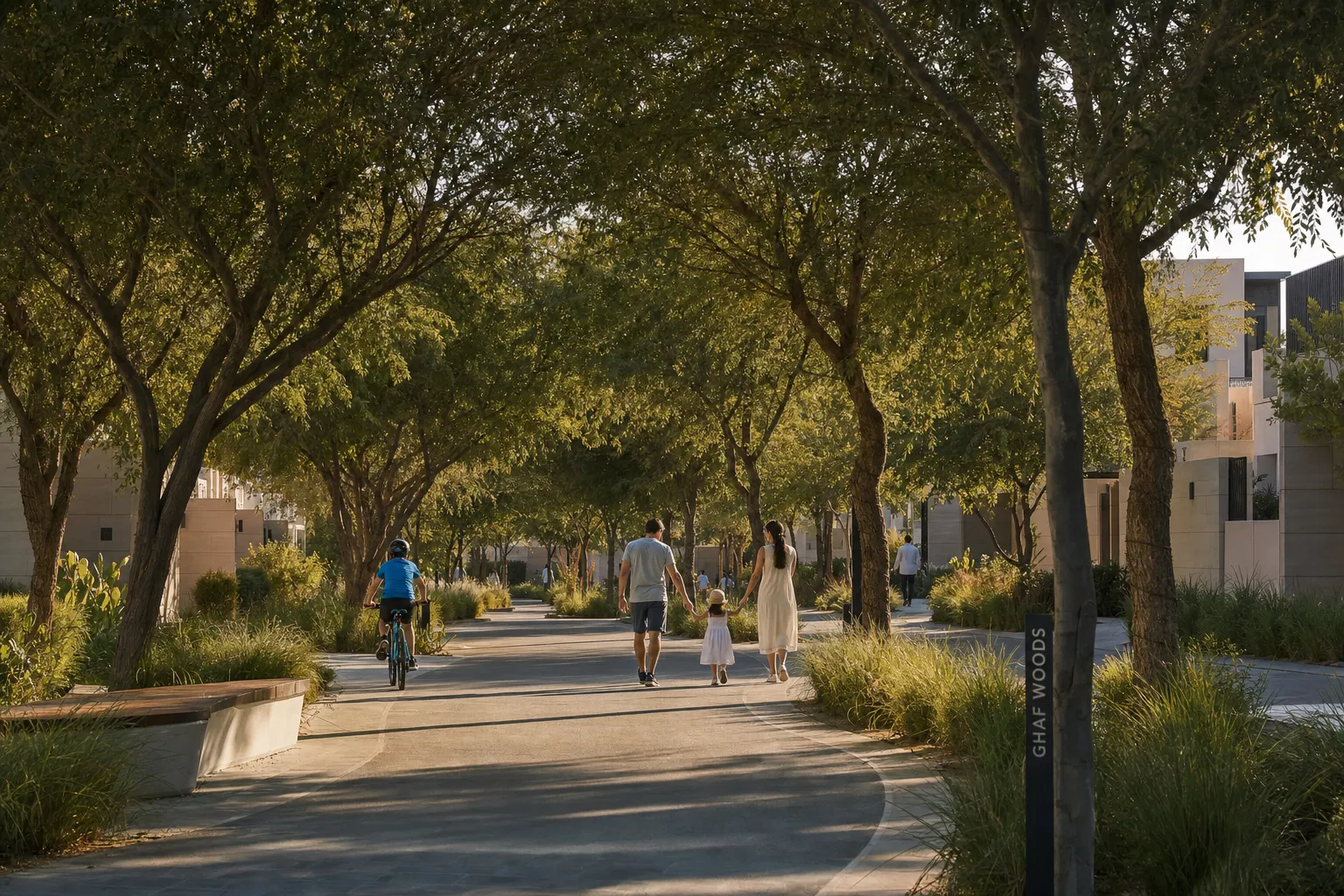
Featured Development
Ghaf Woods, Dubai
35,000 native trees · 5°C cooler microclimate · Forest-integrated living
Framework Analysis
PESTEL Analysis
A systematic examination of the Political, Economic, Social, Technological, Environmental, and Legal forces shaping Dubai's outdoor activity real estate market.
Political
Strategic impact assessment
Dubai 2040 Urban Master Plan
▲ HighMandates a 134% increase in public parks and recreational spaces, embedding outdoor living into the city's long-term development blueprint.
AED 348M Government Park Investment
▲ HighDubai Municipality's commitment to 35 new parks in 2026 across 23 residential communities, backed by a 5-year AED 4 billion pipeline.
Public-Private Partnership (PPP) Models
▲ HighGovernment explicitly invites private sector participation in park development and activation, creating structured revenue opportunities for developers.
Golden Visa & Residency Policies
▲ MediumFavorable long-term residency visas attract quality expatriates who demand and sustain premium community infrastructure over extended periods.
PESTEL Impact Scores
Relative strategic impact of each dimension on the outdoor activity market
Strategic Assessment
SWOT Analysis
An internal and external assessment of the Strengths, Weaknesses, Opportunities, and Threats facing the outdoor activity market in Dubai real estate.
Strengths
6 factors identified
- Strong government backing through Dubai 2040 Master Plan with AED 4B+ pipeline
- Proven 10–25% rental premium for properties with superior outdoor amenities
- World-class developers (Emaar, Aldar, Nakheel, Sobha) driving innovation
- Year-round sunshine enabling outdoor lifestyle marketing advantage
- 86.5% rental occupancy in wellness communities (Dubai Hills Estate H1 2025)
- High-net-worth buyer base willing to pay premiums for quality of life
Weaknesses
6 factors identified
- Extreme summer heat (40–50°C) limits outdoor usability for 4–5 months annually
- High ongoing maintenance costs for green infrastructure in desert climate
- Significant upfront capital investment required for quality outdoor amenity development
- Water scarcity challenges for maintaining extensive landscaping
- Risk of overhyped marketing — buyers must verify actual amenity delivery
- Service charge increases from premium amenity upkeep can deter some buyers
Opportunities
6 factors identified
- Growing demand for specialized facilities: equestrian centers, sports academies, eco-retreats
- Eco-tourism integration blending residential with wellness hospitality
- AI-driven predictive maintenance to reduce long-term operational costs
- Untapped niche: senior wellness communities and age-in-place outdoor design
- International buyer expansion via PropTech virtual community experiences
- Carbon credit and ESG investment opportunities from green infrastructure
Threats
6 factors identified
- Market saturation risk as similar wellness communities proliferate across Dubai
- Global economic downturns could reduce foreign investment and expatriate inflows
- Long-term water and energy resource constraints threatening green infrastructure viability
- Competing regional markets (Abu Dhabi, Riyadh) developing comparable offerings
- Climate change intensifying heat extremes, further limiting outdoor usability windows
- Regulatory changes affecting freehold ownership or foreign investment policies
Market Intelligence
Data & Market Insights
Quantitative evidence supporting the strategic analysis, drawn from Dubai Land Department data, developer reports, and market research.
Property Price Index: Outdoor vs. Standard
Index: 2020 = 100. Communities with premium outdoor amenities vs. standard developments.
- Outdoor-Premium Communities
- Standard Developments
Rental Premium by Outdoor Amenity Type
Estimated % premium above comparable standard units. Source: Market analysis 2025.
Developer Market Share — Outdoor Communities
Estimated share of outdoor-focused residential development activity in Dubai, 2025.
- Emaar Properties
- Nakheel / Dubai Holding
- Aldar Properties
- Sobha Realty
- Damac Properties
- Others / أخرى
Market Performance Benchmarks
GEOGRAPHIC DISTRIBUTION
Outdoor Projects Map
Explore the geographic distribution of major outdoor-focused real estate projects across Dubai's key neighborhoods and districts.
LEGEND
Click any pin to view project details. Use category buttons to filter by type.
Forward Outlook
Key Trends Shaping 2025–2030
The structural forces and emerging patterns that will define the outdoor activity market in Dubai real estate over the next five years.
Forest Living
Transitioning from decorative landscaping to functional, dense urban forests. Projects like Sobha Elwood (10,000 trees), Ghaf Woods (35,000 trees), and Masaar (100,000+ trees) are setting new benchmarks.
Inclusive Design Mandate
All new recreational facilities must integrate multi-generational and accessibility features. Government specifications now require wheelchair-accessible surfaces, sensory play, and age-appropriate zones as baseline requirements.
Wellness as Baseline
Yoga decks, lap pools, meditation gardens, and biophilic interiors have shifted from luxury differentiators to standard expectations in mid-to-high-tier developments across all major communities.
Smart Outdoor Infrastructure
AI-powered irrigation, robotic maintenance, and IoT-enabled amenity management are being embedded into new park specifications, reducing long-term operational costs while improving sustainability.
Actionable Intelligence
Strategic Recommendations
For Developers
- ◆Allocate minimum 30–40% of masterplan area to outdoor and green infrastructure
- ◆Invest in climate-responsive design: shaded corridors, microclimate cooling, smart irrigation
- ◆Differentiate through niche outdoor offerings: equestrian, sports academies, eco-retreats
For Investors
- ◆Prioritize communities with demonstrated outdoor amenity delivery over marketing claims
- ◆Target villa and townhouse segments in wellness districts for strongest capital appreciation
- ◆Monitor Dubai 2040 park pipeline for proximity-driven property value uplift opportunities
For Sales Professionals
- ◆Lead with lifestyle narrative: quantify the 10–25% rental premium in client conversations
- ◆Leverage government park investment data as a credible demand signal for buyers
- ◆Position outdoor amenities as long-term value protection, not short-term marketing